Notice: SSI.php was unable to load a session! This may cause problems with logout and other functions - please make sure SSI.php is included before *anything* else in all your scripts! in /home/blurwqr/public_html/community/SSI.php on line 158
1BluePlanet Solomon Islands
solomon islands flag of Solomon Islands
Print this pages
Email to a friend Add to Favorites
 
 
Welcome, Guest. Please login or register here


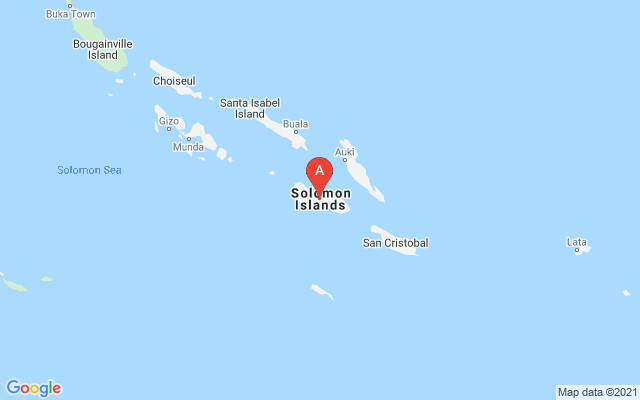
map ofSolomon Islands
Introduction: SOLOMON ISLANDS
The UK established a protectorate over the Solomon Islands in the 1890s. Some of the bitterest fighting of World War II occurred on these islands. Self-government was achieved in 1976 and independence two years later. Ethnic violence, government malfeasance, and endemic crime have undermined stability and civil society. In June 2003, Prime Minister Sir Allen KEMAKEZA sought the assistance of Australia in reestablishing law and order; the following month, an Australian-led multinational force arrived to restore peace and disarm ethnic militias. The Regional Assistance Mission to the Solomon Islands (RAMSI) has been very effective in restoring law and order and rebuilding government institutions.
GEOGRAPHY
Country name: conventional long form: none
conventional short form: Solomon Islands
former: British Solomon Islands
Capital: Honiara
Location: Oceania, group of islands in the South Pacific Ocean, east of Papua New Guinea
Geographic Coordinates: 8 00 S, 159 00 E
Area: total: 28,450 sq km
land: 27,540 sq km
water: 910 sq km
Area Comparative: slightly smaller than Maryland
Land Boundaries: 0 km
Coastline: 5,313 km
Maritime Claims: measured from claimed archipelagic baselines
territorial sea: 12 nm
exclusive economic zone: 200 nm
continental shelf: 200 nm
Climate: tropical monsoon; few extremes of temperature and weather
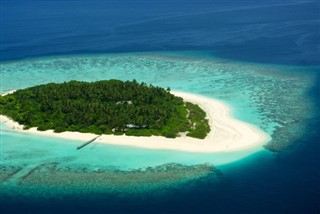
Terrain: mostly rugged mountains with some low coral atolls
Elavation Extremes: lowest point: Pacific Ocean 0 m
highest point: Mount Makarakomburu 2,447 m
Natural Resources: fish, forests, gold, bauxite, phosphates, lead, zinc, nickel
GOVERNEMENT
Governement Type: parliamentary democracy
Administratives Divisions: 9 provinces and 1 capital territory*; Central, Choiseul, Guadalcanal, Honiara*, Isabel, Makira, Malaita, Rennell and Bellona, Temotu, Western
Independence 7 July 1978 (from UK)
National Holiday: Independence Day, 7 July (1978)
Constitution: 7 July 1978
Legal System; English common law, which is widely disregarded
Suffrage 21 years of age; universal
Executive Branch: chief of state: Queen ELIZABETH II (since 6 February 1952), represented by Governor General Nathaniel WAENA (since 7 July 2004)
head of government: Prime Minister Sir Allan KEMAKEZA (since 17 December 2001); Deputy Prime Minister Snyder RINI (since 17 December 2001)
cabinet: Cabinet consists of 20 members appointed by the governor general on the advice of the prime minister from among the members of Parliament
elections: none; the monarch is hereditary; governor general appointed by the monarch on the advice of Parliament for up to five years; following legislative elections, the leader of the majority party or the leader of a majority coalition is usually elected prime minister by Parliament; deputy prime minister appointed by the governor general on the advice of the prime minister from among the members of Parliament
Legislative Branch: unicameral National Parliament (50 seats; members elected from single-member constituencies by popular vote to serve four-year terms)
elections: last held 5 December 2001 (next to be held not later than December 2005)
election results: percent of vote by party - PAP 40%, SIACC 40%, PPP 20%; seats by party - PAP 16, SIACC 13, PPP 2, SILP 1, independents 18
Judicial Branch: Court of Appeal
Political parties and Leaders: Association of Independents [Snyder RINI]; People's Alliance Party or PAP [Allan KEMAKEZA]; People's Progressive Party or PPP [Mannaseh Damukana SOGAVARE]; Solomon Islands Alliance for Change Coalition or SIACC [Bartholomew ULUFA'ALU]; Solomon Islands Labor Party or SILP [Joses TUHANUKU]
note: in general, Solomon Islands politics is characterized by fluid coalitions
PEOPLE
Population: 538,032 (July 2005 est.)
Age structure: 0-14 years: 41.9% (male 114,860/female 110,404)
15-64 years: 54.9% (male 149,400/female 145,970)
65 years and over: 3.2% (male 8,371/female 9,027) (2005 est.)
Median age: total: 18.63 years
male: 18.5 years
female: 18.76 years (2005 est.)
Nationality: noun: Solomon Islander(s)
adjective: Solomon Islander
Ethnic groups: Melanesian 93%, Polynesian 4%, Micronesian 1.5%, European 0.8%, Chinese 0.3%, other 0.4%
Religions: Anglican 45%, Roman Catholic 18%, United (Methodist/Presbyterian) 12%, Baptist 9%, Seventh-Day Adventist 7%, other Protestant 5%, indigenous beliefs 4%
Languages: Melanesian pidgin in much of the country is lingua franca; English is official but spoken by only 1%-2% of the population
note: 120 indigenous languages
COMUNICATIONS
Telephones - main lines in use: 6,600 (2002)
Telephones - mobile cellular: 1,000 (2002)
Telephone system: general assessment: NA
domestic: NA
international: country code - 677; satellite earth station - 1 Intelsat (Pacific Ocean)
Radio broadcast stations: AM 1, FM 1, shortwave 1 (2004)
Television broadcast stations:  
Internet country code: .sb
Internet hosts: 398 (2003)
Internet users: 2,200 (2002)
TRANSPORT
Railways:  
Highways: total: 1,360 km
paved: 34 km
unpaved: 1,326 km (1999 est.)
Waterways:  
Pipelines:  
Ports and harbors: Aola Bay, Honiara, Lofung, Noro, Viru Harbor, Yandina
Merchant marine:  
Airports: 33 (2004 est.)
Airports - with paved runways: total: 2
1,524 to 2,437 m: 1
914 to 1,523 m: 1 (2004 est.)
Airports - with unpaved runways: total: 31
1,524 to 2,437 m: 1
914 to 1,523 m: 9
under 914 m: 21 (2004 est.)
Heliports:  
 
 
Copyright © 1blueplanet.com