| GEOGRAPHY |
| Country name: |
conventional long form: Kingdom of Lesotho
conventional short form: Lesotho
former: Basutoland |
| Capital: |
Maseru |
| Location: |
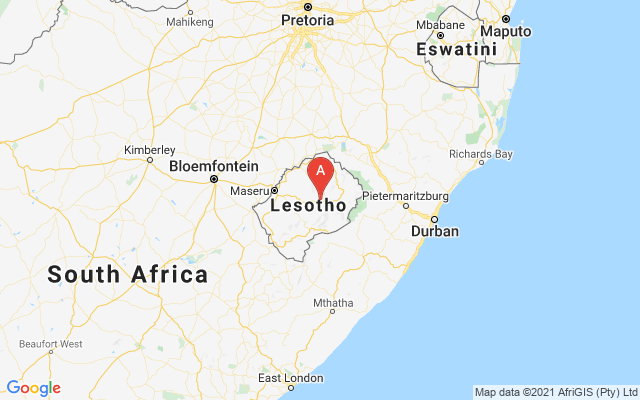
Southern Africa, an enclave of South Africa |
| Geographic
Coordinates: |
29 30 S, 28 30 E |
| Area: |
total: 30,355 sq km
land: 30,355 sq km
water: 0 sq km |
| Area
Comparative: |
slightly smaller than Maryland |
| Land
Boundaries: |
total: 909 km
border countries: South Africa 909 km |
| Coastline: |
0 km (landlocked) |
| Maritime
Claims: |
none (landlocked) |
| Climate: |
temperate; cool to cold, dry winters; hot, wet summers |
| Terrain: |
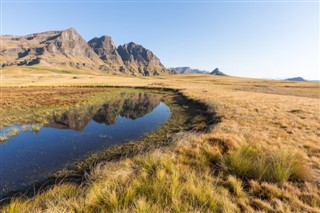
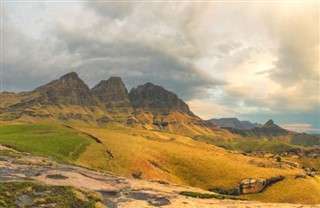
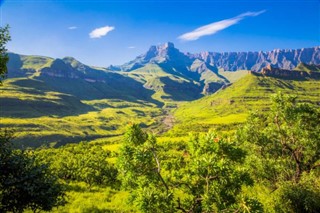
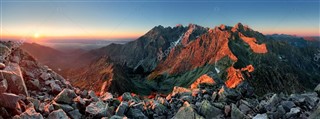
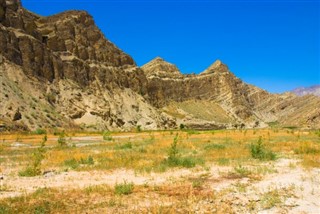
mostly highland with plateaus, hills, and mountains |
| Elavation
Extremes: |
lowest point: junction of the Orange and Makhaleng Rivers 1,400 m
highest point: Thabana Ntlenyana 3,482 m |
| Natural
Resources: |
water, agricultural and grazing land, diamonds, sand, clay, building stone |
| GOVERNEMENT |
| Governement
Type: |
parliamentary constitutional monarchy |
| Administratives
Divisions: |
10 districts; Berea, Butha-Buthe, Leribe, Mafeteng, Maseru, Mohale's Hoek, Mokhotlong, Qacha's Nek, Quthing, Thaba-Tseka |
| Independence |
4 October 1966 (from UK) |
| National
Holiday: |
Independence Day, 4 October (1966) |
| Constitution: |
2 April 1993 |
| Legal
System; |
based on English common law and Roman-Dutch law; judicial review of legislative acts in High Court and Court of Appeal; has not accepted compulsory ICJ jurisdiction |
| Suffrage |
18 years of age; universal |
| Executive
Branch: |
chief of state: King LETSIE III (since 7 February 1996); note - King LETSIE III formerly occupied the throne from November 1990 to February 1995, while his father was in exile
head of government: Prime Minister Pakalitha MOSISILI (since 23 May 1998)
cabinet: Cabinet
elections: none; according to the constitution, the leader of the majority party in the Assembly automatically becomes prime minister; the monarch is hereditary, but, under the terms of the constitution, which came into effect after the March 1993 election, the monarch is a "living symbol of national unity" with no executive or legislative powers; under traditional law the college of chiefs has the power to determine who is next in the line of succession, who shall serve as regent in the event that the successor is not of mature age, and may even depose the monarch |
| Legislative
Branch: |
bicameral Parliament consists of the Senate (33 members - 22 principal chiefs and 11 other members appointed by the ruling party) and the Assembly (120 seats, 80 by direct popular vote and 40 by proportional vote; members elected by popular vote for five-year terms); note - number of seats in the Assembly rose from 80 to 120 in the May 2002 election
elections: last held 25 May 2002 (next to be held May 2007)
election results: percent of vote by party - LCD 54%, BNP 21%, LPC 7%, other 18%; seats by party - LCD 76, BNP 21, LPC 5, other 18 |
| Judicial
Branch: |
High Court (chief justice appointed by the monarch acting on the advice of the Prime Minister); Court of Appeal; Magistrate's Court; customary or traditional court |
| Political
parties and Leaders: |
Basotholand African Congress or BAC [Khauhelo RALITAPOLE]; Basotholand Congress Party or BCP [Ntsukunyane MPHANYA]; Basotho National Party or BNP [Maj. Gen. Justine Metsing LEKHANYA]; Lesotho Congress for Democracy or LCD [Pakalitha MOSISILI] - the governing party; Lesotho People's Congress or LPC [Kelebone MAOPE]; Lesotho Workers Party of LWP [Macaefa BILLY]; Marematlou Freedom Party or MFP [Vincent MALEBO]; National Independent Party or NIP [Anthony MANYELI]; National Progressive Party or NPP [Chief Peete Nkoebe PEETE]; Popular Front for Democracy or PFD [Lekhetho RAKUOANE]; Sefate Democratic Party or SDP [Bofihla NKUEBE] |
| PEOPLE |
| Population: |
1,867,035
note: estimates for this country explicitly take into account the effects of excess mortality due to AIDS; this can result in lower life expectancy, higher infant mortality and death rates, lower population and growth rates, and changes in the distribution of population by age and sex than would otherwise be expected (July 2005 est.) |
| Age structure: |
0-14 years: 36.9% (male 346,930/female 342,459)
15-64 years: 57.6% (male 526,642/female 548,096)
65 years and over: 5.5% (male 42,003/female 60,905) (2005 est.) |
| Median age: |
total: 20.19 years
male: 19.68 years
female: 20.74 years (2005 est.) |
| Nationality: |
noun: Mosotho (singular), Basotho (plural)
adjective: Basotho |
| Ethnic groups: |
Sotho 99.7%, Europeans, Asians, and other 0.3%, |
| Religions: |
Christian 80%, indigenous beliefs 20% |
| Languages: |
Sesotho (southern Sotho), English (official), Zulu, Xhosa |
| COMUNICATIONS |
| Telephones - main
lines in use: |
28,600 (2002) |
| Telephones - mobile
cellular: |
92,000 (2002) |
| Telephone system: |
general assessment: rudimentary system
domestic: consists of a modest but growing number of landlines, a small microwave radio relay system, and a minor radiotelephone communication system; a cellular mobile telephone system is growing
international: country code - 266; satellite earth station - 1 Intelsat (Atlantic Ocean) |
| Radio broadcast
stations: |
AM 1, FM 2, shortwave 1 (1998) |
| Television broadcast
stations: |
1 (2000) |
| Internet country
code: |
.ls |
| Internet hosts: |
119 (2003) |
| Internet users: |
21,000 (2002) |
| TRANSPORT |
| Railways: |
|
| Highways: |
total: 5,940 km
paved: 1,087 km
unpaved: 4,853 km (1999) |
| Waterways: |
|
| Pipelines: |
|
| Ports and harbors: |
none |
| Merchant marine: |
|
| Airports: |
28 (2004 est.) |
| Airports - with
paved runways: |
total: 3
over 3,047 m: 1
914 to 1,523 m: 1
under 914 m: 1 (2004 est.) |
| Airports - with
unpaved runways: |
total: 25
914 to 1,523 m: 4
under 914 m: 21 (2004 est.) |
| Heliports: |
|