Notice: SSI.php was unable to load a session! This may cause problems with logout and other functions - please make sure SSI.php is included before *anything* else in all your scripts! in /home/blurwqr/public_html/community/SSI.php on line 158
1BluePlanet Zambia
zambia flag of Zambia
Print this pages
Email to a friend Add to Favorites
 
 
Welcome, Guest. Please login or register here


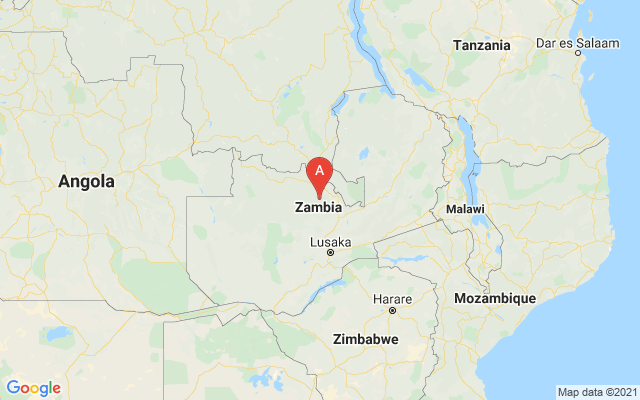
map of Zambia
Introduction: ZAMBIA
The territory of Northern Rhodesia was administered by the South Africa Company from 1891 until it was taken over by the UK in 1923. During the 1920s and 1930s, advances in mining spurred development and immigration. The name was changed to Zambia upon independence in 1964. In the 1980s and 1990s, declining copper prices and a prolonged drought hurt the economy. Elections in 1991 brought an end to one-party rule, but the subsequent vote in 1996 saw blatant harassment of opposition parties. The election in 2001 was marked by administrative problems with three parties filing a legal petition challenging the election of ruling party candidate Levy MWANAWASA. The new president launched a far-reaching anti-corruption campaign in 2002, which resulted in the prosecution of former President Frederick CHILUBA and many of his supporters in late 2003. Opposition parties currently hold a majority of seats in the National Assembly.
GEOGRAPHY
Country name: conventional long form: Republic of Zambia
conventional short form: Zambia
former: Northern Rhodesia
Capital: Lusaka
Location: Southern Africa, east of Angola
Geographic Coordinates: 15 00 S, 30 00 E
Area: total: 752,614 sq km
land: 740,724 sq km
water: 11,890 sq km
Area Comparative: slightly larger than Texas
Land Boundaries: total: 5,664 km
border countries: Angola 1,110 km, Democratic Republic of the Congo 1,930 km, Malawi 837 km, Mozambique 419 km, Namibia 233 km, Tanzania 338 km, Zimbabwe 797 km
Coastline: 0 km (landlocked)
Maritime Claims: none (landlocked)
Climate: tropical; modified by altitude; rainy season (October to April)
Terrain: mostly high plateau with some hills and mountains
Elavation Extremes: lowest point: Zambezi river 329 m
highest point: unnamed location in Mafinga Hills 2,301 m
Natural Resources: copper, cobalt, zinc, lead, coal, emeralds, gold, silver, uranium, hydropower
GOVERNEMENT
Governement Type: republic
Administratives Divisions: 9 provinces; Central, Copperbelt, Eastern, Luapula, Lusaka, Northern, North-Western, Southern, Western
Independence 24 October 1964 (from UK)
National Holiday: Independence Day, 24 October (1964)
Constitution: 24 August 1991
Legal System; based on English common law and customary law; judicial review of legislative acts in an ad hoc constitutional council; has not accepted compulsory ICJ jurisdiction
Suffrage 18 years of age; universal
Executive Branch: chief of state: President Levy MWANAWASA (since 2 January 2002); Vice President Lupando MWAPE (since 4 October 2004); note - the president is both the chief of state and head of government
head of government: President Levy MWANAWASA (since 2 January 2002); Vice President Lupando MWAPE (since 4 October 2004); note - the president is both the chief of state and head of government
cabinet: Cabinet appointed by the president from among the members of the National Assembly
elections: president elected by popular vote for a five-year term; election last held 27 December 2001 (next to be held December 2006); vice president appointed by the president
election results: Levy MWANAWASA elected president; percent of vote - Levy MWANAWASA 29%, Anderson MAZOKA 27%, Christon TEMBO 13%, Tilyenji KAUNDA 10%, Godfrey MIYANDA 8%, Benjamin MWILA 5%, Michael SATA 3%, other 5%
Legislative Branch: unicameral National Assembly (150 seats; members are elected by popular vote to serve five-year terms)
elections: last held 27 December 2001 (next to be held December 2006)
election results: percent of vote by party - MMD 45.9%, UPND 32.4%, UNIP 8.8%, FDD 8.1%, HP 2.7%, PF 0.7%, ZRP 0.7%, independents 0.7%; seats by party - MMD 68, UPND 48, UNIP 13, FDD 12, HP 4, PF 1, ZRP 1, independents 1; seats not determined 2
Judicial Branch: Supreme Court (the final court of appeal; justices are appointed by the president); High Court (has unlimited jurisdiction to hear civil and criminal cases)
Political parties and Leaders: Agenda for Zambia or AZ [Inonge MBIKUSITA-LEWANIKA]; Forum for Democracy and Development or FDD [Christon TEMBO]; Heritage Party or HP [Godfrey MIYANDA]; Liberal Progressive Front or LPF [Roger CHONGWE, president]; Movement for Multiparty Democracy or MMD [Levy MWANAWASA, acting president]; National Leadership for Development or NLD [Yobert SHAMAPANDE]; National Party or NP [Dr. Sam CHIPUNGU]; Patriotic Front or PF [Michael SATA]; Zambian Republican Party or ZRP [Benjamin MWILA]; Social Democratic Party or SDP [Gwendoline KONIE]; United National Independence Party or UNIP [Francis NKHOMA, president]; United Party for National Development or UPND [Anderson MAZOKA]
PEOPLE
Population: 11,261,795
note: estimates for this country explicitly take into account the effects of excess mortality due to AIDS; this can result in lower life expectancy, higher infant mortality and death rates, lower population and growth rates, and changes in the distribution of population by age and sex than would otherwise be expected (July 2005 est.)
Age structure: 0-14 years: 46.5% (male 2,626,911/female 2,609,857)
15-64 years: 51.1% (male 2,848,402/female 2,904,376)
65 years and over: 2.4% (male 118,043/female 154,206) (2005 est.)
Median age: total: 16.46 years
male: 16.26 years
female: 16.67 years (2005 est.)
Nationality: noun: Zambian(s)
adjective: Zambian
Ethnic groups: African 98.7%, European 1.1%, other 0.2%
Religions: Christian 50%-75%, Muslim and Hindu 24%-49%, indigenous beliefs 1%
Languages: English (official), major vernaculars - Bemba, Kaonda, Lozi, Lunda, Luvale, Nyanja, Tonga, and about 70 other indigenous languages
COMUNICATIONS
Telephones - main lines in use: 88,400 (2003)
Telephones - mobile cellular: 241,000 (2003)
Telephone system: general assessment: facilities are aging but still among the best in Sub-Saharan Africa
domestic: high-capacity microwave radio relay connects most larger towns and cities; several cellular telephone services in operation; Internet service is widely available; very small aperture terminal (VSAT) networks are operated by private firms
international: country code - 260; satellite earth stations - 2 Intelsat (1 Indian Ocean and 1 Atlantic Ocean)
Radio broadcast stations: AM 19, FM 5, shortwave 4 (2001)
Television broadcast stations: 9 (2002)
Internet country code: .zm
Internet hosts: 1,880 (2003)
Internet users: 68,200 (2003)
TRANSPORT
Railways: total: 2,173 km
narrow gauge: 2,173 km 1.067-m gauge
note: includes 891 km of the Tanzania-Zambia Railway Authority (TAZARA) (2003)
Highways: total: 91,440 km
paved: 20,117 km
unpaved: 71,323 km (2001)
Waterways: 2,250 km
note: includes Lake Tanganyika and the Zambezi and Luapula rivers (2003)
Pipelines: oil 771 km (2004)
Ports and harbors: Mpulungu
Merchant marine:  
Airports: 109 (2004 est.)
Airports - with paved runways: total: 10
over 3,047 m: 1
2,438 to 3,047 m: 3
1,524 to 2,437 m: 4
914 to 1,523 m: 2 (2004 est.)
Airports - with unpaved runways: total: 99
2,438 to 3,047 m: 1
1,524 to 2,437 m: 4
914 to 1,523 m: 62
under 914 m: 32 (2004 est.)
Heliports:  
 
 
Copyright © 1blueplanet.com