Notice: SSI.php was unable to load a session! This may cause problems with logout and other functions - please make sure SSI.php is included before *anything* else in all your scripts! in /home/blurwqr/public_html/community/SSI.php on line 158
1BluePlanet Somalia
somalia flag of Somalia
Print this pages
Email to a friend Add to Favorites
 
 
Welcome, Guest. Please login or register here


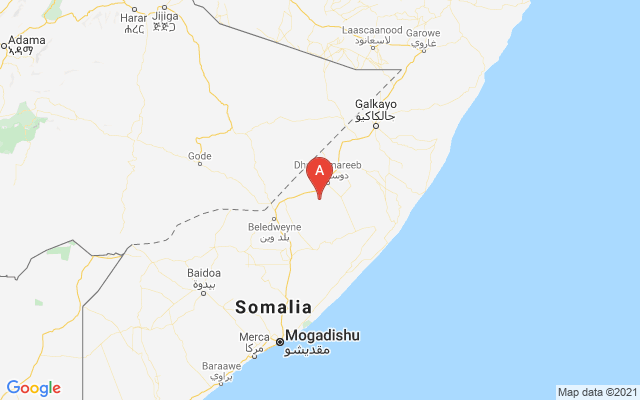
map of Somalia
Introduction: SOMALIA
The SIAD BARRE regime was ousted in January 1991; turmoil, factional fighting, and anarchy have followed in the years since. In May of 1991, northern clans declared an independent Republic of Somaliland that now includes the administrative regions of Awdal, Woqooyi Galbeed, Togdheer, Sanaag, and Sool. Although not recognized by any government, this entity has maintained a stable existence, aided by the overwhelming dominance of a ruling clan and economic infrastructure left behind by British, Russian, and American military assistance programs. The regions of Bari and Nugaal and northern Mudug comprise a neighboring self-declared autonomous state of Puntland, which has been self-governing since 1998, but does not aim at independence; it has also made strides towards reconstructing a legitimate, representative government, but has suffered some civil strife. Puntland disputes its border with Somaliland as it also claims portions of eastern Sool and Sanaag. Beginning in 1993, a two-year UN humanitarian effort (primarily in the south) was able to alleviate famine conditions, but when the UN withdrew in 1995, having suffered significant casualties, order still had not been restored. The mandate of the Transitional National Government (TNG), created in August 2000 in Arta, Djibouti, expired in August 2003. New Somali President Abdullahi YUSUF Ahmed has formed a new Transitional Federal Government (TFG) consisting of a 275-member parliament. It was established in October 2004 to replace the TNG but has not yet moved to Mogadishu. Discussions regarding the establishment of a new government in Mogadishu are ongoing in Kenya. Numerous warlords and factions are still fighting for control of the capital city as well as for other southern regions. Suspicion of Somali links with global terrorism further complicates the picture.
GEOGRAPHY
Country name: conventional long form: none
conventional short form: Somalia
former: Somali Republic, Somali Democratic Republic
Capital: Mogadishu
Location: Eastern Africa, bordering the Gulf of Aden and the Indian Ocean, east of Ethiopia
Geographic Coordinates: 10 00 N, 49 00 E
Area: total: 637,657 sq km
land: 627,337 sq km
water: 10,320 sq km
Area Comparative: slightly smaller than Texas
Land Boundaries: total: 2,340 km
border countries: Djibouti 58 km, Ethiopia 1,600 km, Kenya 682 km
Coastline: 3,025 km
Maritime Claims: territorial sea: 200 nm
Climate: principally desert; December to February - northeast monsoon, moderate temperatures in north and very hot in south; May to October - southwest monsoon, torrid in the north and hot in the south, irregular rainfall, hot and humid periods (tangambili) between monsoons
Terrain: mostly flat to undulating plateau rising to hills in north
Elavation Extremes: lowest point: Indian Ocean 0 m
highest point: Shimbiris 2,416 m
Natural Resources: uranium and largely unexploited reserves of iron ore, tin, gypsum, bauxite, copper, salt, natural gas, likely oil reserves
GOVERNEMENT
Governement Type: no permanent national government; transitional, parliamentary federal government
Administratives Divisions: 18 regions (plural - NA, singular - gobolka); Awdal, Bakool, Banaadir, Bari, Bay, Galguduud, Gedo, Hiiraan, Jubbada Dhexe, Jubbada Hoose, Mudug, Nugaal, Sanaag, Shabeellaha Dhexe, Shabeellaha Hoose, Sool, Togdheer, Woqooyi Galbeed
Independence 1 July 1960 (from a merger of British Somaliland, which became independent from the UK on 26 June 1960, and Italian Somaliland, which became independent from the Italian-administered UN trusteeship on 1 July 1960, to form the Somali Republic)
National Holiday: Foundation of the Somali Republic, 1 July (1960); note - 26 June (1960) in Somaliland
Constitution: 25 August 1979, presidential approval 23 September 1979
note: the formation of transitional governing institutions, known as the Transitional Federal Government, is currently ongoing
Legal System; no national system; Shari'a and secular courts are in some localities
Suffrage 18 years of age; universal
Executive Branch: chief of state: Abdullahi YUSUF Ahmed (since 14 October 2004); note - a new Transitional Federal Government consisting of a 275-member parliament was established in October 2004 but remains resident in Nairobi, Kenya, and has not extablished effective governance inside Somalia
head of government: Prime Minister Ali Muhammad GHEDI (since 24 December 2004)
cabinet: Cabinet appointed by the prime minister and approved by the Transitional Federal Assembly
election results: Abdullahi YUSUF Ahmed, the leader of the Puntland region of Somalia, was elected president by the Transitional Federal Assembly
Legislative Branch: unicameral National Assembly
note: fledgling parliament; a 275-member Transitional Federal Assembly; the new parliament consists of 61 seats assigned to each of four large clan groups (Darod, Digil-Mirifle, Dir, and Hawiye) with the remaining 31 seats divided between minority clans
Judicial Branch: following the breakdown of the central government, most regions have reverted to local forms of conflict resolution, either secular, traditional clan-based arbitration, or Islamic (Shari'a) law with a provision for appeal of all sentences
Political parties and Leaders: none
PEOPLE
Population: 8,591,629
note: this estimate was derived from an official census taken in 1975 by the Somali Government; population counting in Somalia is complicated by the large number of nomads and by refugee movements in response to famine and clan warfare (July 2005 est.)
Age structure: 0-14 years: 44.5% (male 1,918,209/female 1,905,974)
15-64 years: 52.9% (male 2,278,406/female 2,263,602)
65 years and over: 2.6% (male 96,256/female 129,182) (2005 est.)
Median age: total: 17.59 years
male: 17.53 years
female: 17.65 years (2005 est.)
Nationality: noun: Somali(s)
adjective: Somali
Ethnic groups: Somali 85%, Bantu and other non-Somali 15% (including Arabs 30,000)
Religions: Sunni Muslim
Languages: Somali (official), Arabic, Italian, English
COMUNICATIONS
Telephones - main lines in use: 100,000 (2002 est.)
Telephones - mobile cellular: 35,000 (2002)
Telephone system: general assessment: the public telecommunications system was almost completely destroyed or dismantled by the civil war factions; private wireless companies offer service in most major cities and charge the lowest international rates on the continent
domestic: local cellular telephone systems have been established in Mogadishu and in several other population centers
international: country code - 252; international connections are available from Mogadishu by satellite
Radio broadcast stations: AM 0, FM 11, shortwave 1 in Mogadishu; 1 FM in Puntland, 1 FM in Somaliland (2001)
Television broadcast stations: 4
note: two in Mogadishu; two in Hargeisa (2001)
Internet country code: .so
Internet hosts: 4 (2004)
Internet users: 89,000 (2002)
TRANSPORT
Railways:  
Highways: total: 22,100 km
paved: 2,608 km
unpaved: 19,492 km (1999 est.)
Waterways:  
Pipelines:  
Ports and harbors: Boosaaso, Berbera, Chisimayu (Kismaayo), Merca, Mogadishu
Merchant marine:  
Airports: 60 (2004 est.)
Airports - with paved runways: total: 6
over 3,047 m: 4
2438 to 3047 m: 1
1,524 to 2,437 m: 1 (2004 est.)
Airports - with unpaved runways: total: 54
2,438 to 3,047 m: 4
1,524 to 2,437 m: 19
914 to 1,523 m: 29
under 914 m: 2 (2004 est.)
Heliports:  
 
 
Copyright © 1blueplanet.com