Notice: SSI.php was unable to load a session! This may cause problems with logout and other functions - please make sure SSI.php is included before *anything* else in all your scripts! in /home/blurwqr/public_html/community/SSI.php on line 158
1BluePlanet Slovenia
slovenia flag of Slovenia
Print this pages
Email to a friend Add to Favorites
 
 
Welcome, Guest. Please login or register here


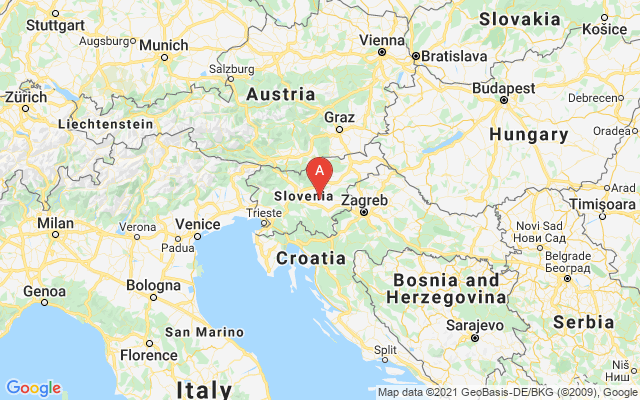
map of Slovenia
Introduction: SLOVENIA
The Slovene lands were part of the Holy Roman Empire and Austria until 1918 when the Slovenes joined the Serbs and Croats in forming a new multinational state, renamed Yugoslavia in 1929. After World War II, Slovenia became a republic of the renewed Yugoslavia, which though Communist, distanced itself from Moscow's rule. Dissatisfied with the exercise of power of the majority Serbs, the Slovenes succeeded in establishing their independence in 1991 after a short 10-day war. Historical ties to Western Europe, a strong economy, and a stable democracy have assisted in Slovenia's transformation to a modern state. Slovenia acceded to both NATO and the EU in the spring of 2004.
GEOGRAPHY
Country name: conventional long form: Republic of Slovenia
conventional short form: Slovenia
local long form: Republika Slovenija
local short form: Slovenija
former: People's Republic of Slovenia, Socialist Republic of Slovenia
Capital: Ljubljana
Location: Central Europe, eastern Alps bordering the Adriatic Sea, between Austria and Croatia
Geographic Coordinates: 46 07 N, 14 49 E
Area: total: 20,273 sq km
land: 20,151 sq km
water: 122 sq km
Area Comparative: slightly smaller than New Jersey
Land Boundaries: total: 1,334 km
border countries: Austria 330 km, Croatia 670 km, Italy 232 km, Hungary 102 km
Coastline: 46.6 km
Maritime Claims: NA
Climate: Mediterranean climate on the coast, continental climate with mild to hot summers and cold winters in the plateaus and valleys to the east
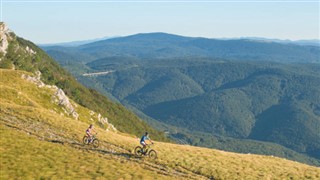
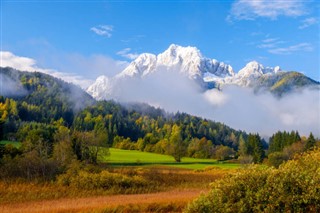
Terrain: a short coastal strip on the Adriatic, an alpine mountain region adjacent to Italy and Austria, mixed mountains and valleys with numerous rivers to the east
Elavation Extremes: lowest point: Adriatic Sea 0 m
highest point: Triglav 2,864 m
Natural Resources: lignite coal, lead, zinc, mercury, uranium, silver, hydropower, forests
GOVERNEMENT
Governement Type: parliamentary democratic republic
Administratives Divisions: 182 municipalities (obcine, singular - obcina) and 11 urban municipalities* (mestne obcine , singular - mestna obcina ) Ajdovscina, Beltinci, Benedikt, Bistrica ob Sotli, Bled, Bloke, Bohinj, Borovnica, Bovec, Braslovce, Brda, Brezice, Brezovica, Cankova, Celje*, Cerklje na Gorenjskem, Cerknica, Cerkno, Cerkvenjak, Crensovci, Crna na Koroskem, Crnomelj, Destrnik, Divaca, Dobje, Dobrepolje, Dobrna, Dobrova-Horjul-Polhov Gradec, Dobrovnik-Dobronak, Dolenjske Toplice, Dol pri Ljubljani, Domzale, Dornava, Dravograd, Duplek, Gorenja Vas-Poljane, Gorisnica, Gornja Radgona, Gornji Grad, Gornji Petrovci, Grad, Grosuplje, Hajdina, Hoce-Slivnica, Hodos-Hodos, Horjul, Hrastnik, Hrpelje-Kozina, Idrija, Ig, Ilirska Bistrica, Ivancna Gorica, Izola-Isola, Jesenice, Jezersko, Jursinci, Kamnik, Kanal, Kidricevo, Kobarid, Kobilje, Kocevje, Komen, Komenda, Koper-Capodistria*, Kostel, Kozje, Kranj*, Kranjska Gora, Krizevci, Krsko, Kungota, Kuzma, Lasko, Lenart, Lendava-Lendva, Litija, Ljubljana*, Ljubno, Ljutomer, Logatec, Loska Dolina, Loski Potok, Lovrenc na Pohorju, Luce, Lukovica, Majsperk, Maribor*, Markovci, Medvode, Menges, Metlika, Mezica, Miklavz na Dravskem Polju, Miren-Kostanjevica, Mirna Pec, Mislinja, Moravce, Moravske Toplice, Mozirje, Murska Sobota*, Muta, Naklo, Nazarje, Nova Gorica*, Novo Mesto*, Odranci, Oplotnica, Ormoz, Osilnica, Pesnica, Piran-Pirano, Pivka, Podcetrtek, Podlehnik, Podvelka, Polzela, Postojna, Prebold, Preddvor, Prevalje, Ptuj*, Puconci, Race-Fram, Radece, Radenci, Radlje ob Dravi, Radovljica, Ravne na Koroskem, Razkrizje, Ribnica, Ribnica na Pohorju, Rogasovci, Rogaska Slatina, Rogatec, Ruse, Salovci, Selnica ob Dravi, Semic, Sempeter-Vrtojba, Sencur, Sentilj, Sentjernej, Sentjur pri Celju, Sevnica, Sezana, Skocjan, Skofja Loka, Skofljica, Slovenj Gradec*, Slovenska Bistrica, Slovenske Konjice, Smarje pri Jelsah, Smartno ob Paki, Smartno pri Litiji, Sodrazica, Solcava, Sostanj, Starse, Store, Sveta Ana, Sveti Andraz v Slovenskih Goricah, Sveti Jurij, Tabor, Tisina, Tolmin, Trbovlje, Trebnje, Trnovska Vas, Trzic, Trzin, Turnisce, Velenje*, Velika Polana, Velike Lasce, Verzej, Videm, Vipava, Vitanje, Vodice, Vojnik, Vransko, Vrhnika, Vuzenica, Zagorje ob Savi, Zalec, Zavrc, Zelezniki, Zetale, Ziri, Zirovnica, Zuzemberk, Zrece
note: there may be 45 more municipalities
Independence 25 June 1991 (from Yugoslavia)
National Holiday: Independence Day/Statehood Day, 25 June (1991)
Constitution: adopted 23 December 1991, effective 23 December 1991
Legal System; based on civil law system
Suffrage 18 years of age; universal (16 years of age, if employed)
Executive Branch: chief of state: President Janez DRNOVSEK (since 22 December 2002)
head of government: Prime Minister Janez JANSA (since 9 November 2004)
cabinet: Council of Ministers nominated by the prime minister and elected by the National Assembly
elections: president elected by popular vote for a five-year term; election last held 10 November and 1 December 2002 (next to be held in the fall of 2007); following National Assembly elections, the leader of the majority party or the leader of a majority coalition is usually nominated to become prime minister by the president and elected by the National Assembly; election last held 9 November 2004 (next National Assembly elections to be held October 2008)
election results: Janez DRNOVSEK elected president; percent of vote - Janez DRNOVSEK 56.5%, Barbara BREZIGAR 43.5%; Janez JANSA elected prime minister; National Assembly vote - 57 to 27
Legislative Branch: bicameral Parliament consisting of a National Assembly or Drzavni Zbor (90 seats; 40 are directly elected and 50 are selected on a proportional basis; note - the numbers of directly elected and proportionally elected seats varies with each election; members are elected by popular vote to serve four-year terms) and the National Council or Drzavni Svet (this is primarily an advisory body organized on corporatist principles with limited legislative powers; it may propose laws, ask to review any National Assembly decisions, and call national referenda; members are indirectly elected to five-year terms by an electoral college)
elections: National Assembly - last held 3 October 2004 (next to be held October 2008)
election results: percent of vote by party - SDS 29.1%, LDS 22.8%, ZLSD 10.2%, NSi 9%, SLS 6.8%, SNS 6.3%, DeSUS 4.1%, other 11.7%; seats by party - SDS 29, LDS 23, ZLSD 10, NSi 9, SLS 7, SNS 6, DeSUS 4, Hungarian and Italian minorities 1 each
Judicial Branch: Supreme Court (judges are elected by the National Assembly on the recommendation of the Judicial Council); Constitutional Court (judges elected for nine-year terms by the National Assembly and nominated by the president)
Political parties and Leaders: Democratic Party of Retired (Persons) of Slovenia or DeSUS [Anton ROUS]; Liberal Democratic Party or LDS [Anton ROP]; New Slovenia or NSi [Andrej BAJUK]; Slovene Democratic Party or SDS [Janez Jansa]; Slovene National Party or SNS [Zmago JELINCIC]; Slovene People's Party or SLS [Janez PODOBNIK]; Slovene Youth Party or SMS [Darko KRANJC]; United List of Social Democrats or ZLSD [Borut PAHOR]
PEOPLE
Population: 2,011,070 (July 2005 est.)
Age structure: 0-14 years: 14% (male 145,016/female 137,012)
15-64 years: 70.6% (male 715,629/female 704,079)
65 years and over: 15.4% (male 118,298/female 191,036) (2005 est.)
Median age: total: 40.23 years
male: 38.65 years
female: 41.75 years (2005 est.)
Nationality: noun: Slovene(s)
adjective: Slovenian
Ethnic groups: Slovene 92%, Croat 1%, Serb 0.5%, Hungarian 0.4%, Bosniak 0.3%, other 5.8% (1991)
Religions: Roman Catholic (Uniate 2%) 70.8%, Lutheran 1%, Muslim 1%, atheist 4.3%, other 22.9%
Languages: Slovenian 92%, Serbo-Croatian 6.2%, other 1.8%
COMUNICATIONS
Telephones - main lines in use: 812,300 (2003)
Telephones - mobile cellular: 1,739,100 (2003)
Telephone system: general assessment: NA
domestic: 100% digital (2000)
international: country code - 386
Radio broadcast stations: AM 17, FM 160, shortwave 0 (1998)
Television broadcast stations: 48 (2001)
Internet country code: .si
Internet hosts: 45,491 (2004)
Internet users: 750,000 (2002)
TRANSPORT
Railways: total: 1,201 km
standard gauge: 1,201 km 1.435-m gauge (499 km electrified) (2003)
Highways: total: 20,250 km
paved: 20,250 km (including 456 km of expressways)
unpaved: 0 km (2002)
Waterways:  
Pipelines: gas 2,526 km; oil 11 km (2004)
Ports and harbors: Izola, Koper, Piran
Merchant marine: registered in other countries: 23
Airports: 14 (2004 est.)
Airports - with paved runways: total: 6
over 3,047 m: 1
2,438 to 3,047 m: 1
1,524 to 2,437 m: 1
914 to 1,523 m: 2
under 914 m: 1 (2004 est.)
Airports - with unpaved runways: total: 8
1,524 to 2,437 m: 2
914 to 1,523 m: 2
under 914 m: 4 (2004 est.)
Heliports:  
 
 
Copyright © 1blueplanet.com