Notice: SSI.php was unable to load a session! This may cause problems with logout and other functions - please make sure SSI.php is included before *anything* else in all your scripts! in /home/blurwqr/public_html/community/SSI.php on line 158
1BluePlanet Niue
niue flag of Niue
Print this pages
Email to a friend Add to Favorites
 
 
Welcome, Guest. Please login or register here


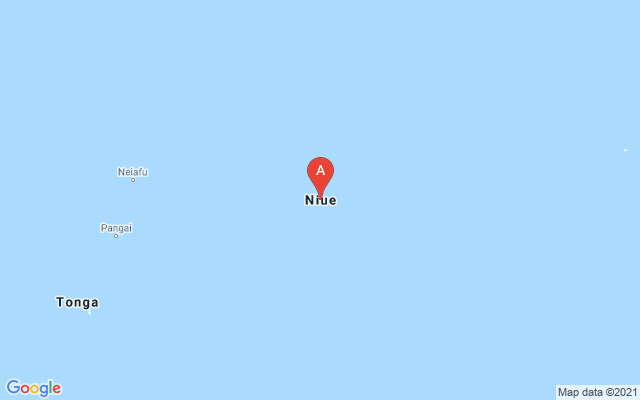
map of Niue
Introduction: NIUE
Niue's remoteness, as well as cultural and linguistic differences between its Polynesian inhabitants and those of the rest of the Cook Islands, have caused it to be separately administered. The population of the island continues to drop (from a peak of 5,200 in 1966 to about 2,100 in 2004), with substantial emigration to New Zealand, 2,400 km to the southwest.
GEOGRAPHY
Country name: conventional long form: none
conventional short form: Niue
former: Savage Island
Capital: Alofi
Location: Oceania, island in the South Pacific Ocean, east of Tonga
Geographic Coordinates: 19 02 S, 169 52 W
Area: total: 260 sq km
land: 260 sq km
water: 0 sq km
Area Comparative: 1.5 times the size of Washington, DC
Land Boundaries: 0 km
Coastline: 64 km
Maritime Claims: territorial sea: 12 nm
exclusive economic zone: 200 nm
 
Climate: tropical; modified by southeast trade winds
Terrain: steep limestone cliffs along coast, central plateau
Elavation Extremes: lowest point: Pacific Ocean 0 m
highest point: unnamed location near Mutalau settlement 68 m
Natural Resources: fish, arable land
GOVERNEMENT
Governement Type: self-governing parliamentary democracy (self-governing in free association with New Zealand since 1974; Niue fully responsible for internal affairs; New Zealand retains responsibility for external affairs and defense; however, these responsibilities confer no rights of control and are only exercised at the request of the Government of Niue )
Administratives Divisions: none; note - there are no first-order administrative divisions as defined by the US Government, but there are 14 villages at the second order
Independence on 19 October 1974, Niue became a self-governing parliamentary government in free association with New Zealand
National Holiday: Waitangi Day (Treaty of Waitangi established British sovereignty over New Zealand), 6 February (1840)
Constitution: 19 October 1974 (Niue Constitution Act)
Legal System; English common law
note: Niue is self-governing, with the power to make its own laws
Suffrage 18 years of age; universal
Executive Branch: chief of state: Queen ELIZABETH II (since 6 February 1952); the UK and New Zealand are represented by New Zealand High Commissioner John BRYAN (since NA May 2000)
head of government: Premier Young VIVIAN (since 1 May 2002)
cabinet: Cabinet consists of the premier and three ministers
elections: the monarch is hereditary; premier elected by the Legislative Assembly for a three-year term; election last held 1 May 2002 (next to be held May 2005)
election results: Young VIVIAN elected premier; percent of Legislative Assembly vote - Young VIVIAN (NPP) 70%, Hunukitama HUNUKI (AI) 30%
Legislative Branch: unicameral Legislative Assembly (20 seats; members elected by popular vote to serve three-year terms; six elected from a common roll and 14 are village representatives)
elections: last held 21 March 2002 (next to be held March 2005)
election results: percent of vote by party - NA%; seats by party - NPP 9, independents 11; note - all 20 seats were reelected
Judicial Branch: Supreme Court of New Zealand; High Court of Niue
Political parties and Leaders: Niue People's Action Party or NPP [Young VIVIAN]; Alliance of Independents or AI [leader NA]
PEOPLE
Population: 2,166 (July 2005 est.)
Age structure: 0-14 years: NA
15-64 years: NA
65 years and over: NA
Median age:  
Nationality: noun: Niuean(s)
adjective: Niuean
Ethnic groups: Polynesian (with some 200 Europeans, Samoans, and Tongans)
Religions: Ekalesia Niue (Niuean Church - a Protestant church closely related to the London Missionary Society) 75%, Latter-Day Saints 10%, other 15% (mostly Roman Catholic, Jehovah's Witnesses, Seventh-Day Adventist)
Languages: Niuean, a Polynesian language closely related to Tongan and Samoan; English
COMUNICATIONS
Telephones - main lines in use: 1,100 est (2002)
Telephones - mobile cellular: 400 (2002)
Telephone system: domestic: single-line telephone system connects all villages on island
international: country code - 683
Radio broadcast stations: AM 1, FM 1, shortwave 0 (1998)
Television broadcast stations: 1 (1997)
Internet country code: .nu
Internet hosts:  
Internet users: NA
TRANSPORT
Railways:  
Highways: total: 234 km
paved: 86 km
unpaved: 148 km (2001)
Waterways:  
Pipelines:  
Ports and harbors: none; offshore anchorage only
Merchant marine:  
Airports: 1 (2004 est.)
Airports - with paved runways: total: 1
1,524 to 2,437 m: 1 (2004 est.)
Airports - with unpaved runways:  
Heliports:  
 
 
Copyright © 1blueplanet.com