cook islands flag of Cook Islands
Print this pages
Email to a friend Add to Favorites
 
 
Welcome, Guest. Please login or register here


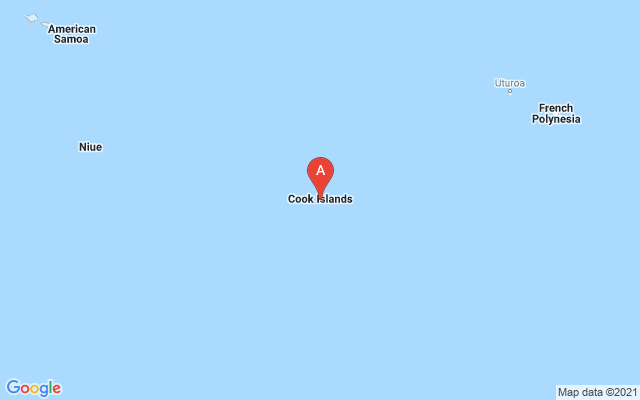
map of Cook Islands
Introduction: COOK ISLANDS
Named after Captain Cook, who sighted them in 1770, the islands became a British protectorate in 1888. By 1900, administrative control was transferred to New Zealand; in 1965 residents chose self-government in free association with New Zealand. The emigration of skilled workers to New Zealand and government deficits are continuing problems.
GEOGRAPHY
Country name: conventional long form: none
conventional short form: Cook Islands
former: Harvey Islands
Capital: Avarua
Location: Oceania, group of islands in the South Pacific Ocean, about one-half of the way from Hawaii to New Zealand
Geographic Coordinates: 21 14 S, 159 46 W
Area: total: 240 sq km
land: 240 sq km
water: 0 sq km
Area Comparative: 1.3 times the size of Washington, DC
Land Boundaries: 0 km
Coastline: 120 km
Maritime Claims: territorial sea: 12 nm
exclusive economic zone: 200 nm
continental shelf: 200 nm or to the edge of the continental margin
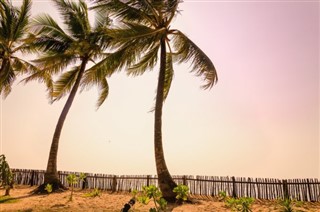
Climate: tropical; moderated by trade winds
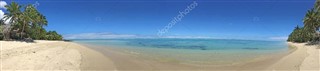
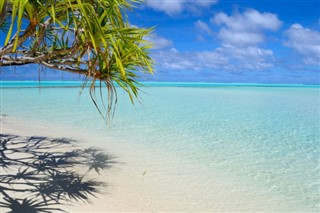
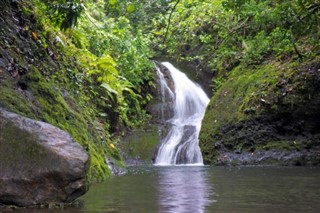
Terrain: low coral atolls in north; volcanic, hilly islands in south
Elavation Extremes: lowest point: Pacific Ocean 0 m
highest point: Te Manga 652 m
Natural Resources: NEGL
GOVERNEMENT
Governement Type: self-governing parliamentary democracy
Administratives Divisions: none
Independence none (became self-governing in free association with New Zealand on 4 August 1965 and has the right at any time to move to full independence by unilateral action) ( Dependency status:self-governing in free association with New Zealand; Cook Islands is fully responsible for internal affairs; New Zealand retains responsibility for external affairs and defense, in consultation with the Cook Islands )
National Holiday: Constitution Day, first Monday in August (1965)
Constitution: 4 August 1965
Legal System; based on New Zealand law and English common law
Suffrage NA years of age; universal adult
Executive Branch: chief of state: Queen ELIZABETH II (since 6 February 1952), represented by Frederick GOODWIN (since 9 February 2001); New Zealand High Commissioner Kurt MEYER (since July 2001), representative of New Zealand
head of government: Prime Minister Jim MARURAI (since 14 December 2004); Deputy Prime Minister SIR Geoffrey HENRY (since 14 December 2004)
cabinet: Cabinet chosen by the prime minister; collectively responsible to Parliament
elections: none; the monarch is hereditary; the UK representative is appointed by the monarch; the New Zealand high commissioner is appointed by the New Zealand Government; following legislative elections, the leader of the majority party or the leader of the majority coalition usually becomes prime minister
Legislative Branch: unicameral Parliament (25 seats; members elected by popular vote to serve five-year terms)
elections: last held 7 September 2004 (next to be held by 2009)
election results: percent of vote by party - NA%; seats by party - CIP 10, DAP 9, Demo Tumu 4, independent 1; note - one seat undecided pending by-election
note: the House of Ariki (chiefs) advises on traditional matters and maintains considerable influence, but has no legislative powers
Judicial Branch: High Court
Political parties and Leaders: Cook Islands People's Party or CIP [Geoffrey HENRY]; Democratic Alliance Party or DAP [Terepai MAOATE]; New Alliance Party or NAP [Norman GEORGE]; Cook Islands National Party or CIN [Teariki HEATHER]; Demo Party Tumu [Robert WOONTON]
PEOPLE
Population: 21,388 (July 2005 est.)
Age structure: 0-14 years: NA
15-64 years: NA
65 years and over: NA
Median age:  
Nationality: noun: Cook Islander(s)
adjective: Cook Islander
Ethnic groups: Polynesian (full blood) 81.3%, Polynesian and European 7.7%, Polynesian and non-European 7.7%, European 2.4%, other 0.9%
Religions: Christian (majority of populace are members of the Cook Islands Christian Church)
Languages: English (official), Maori
COMUNICATIONS
Telephones - main lines in use: 6,200 (2002)
Telephones - mobile cellular: 1,500 (2002)
Telephone system: general assessment: Telecom Cook Islands offers international direct dialing, Internet, email, fax, and Telex
domestic: the individual islands are connected by a combination of satellite earth stations, microwave systems, and VHF and HF radiotelephone; within the islands, service is provided by small exchanges connected to subscribers by open-wire, cable, and fiber-optic cable
international: country code - 682; satellite earth station - 1 Intelsat (Pacific Ocean)
Radio broadcast stations: AM 1, FM 1, shortwave 0 (2004)
Television broadcast stations: 1 (outer islands receive satellite broadcasts) (2004)
Internet country code: .ck
Internet hosts:  
Internet users: 3,600 (2002)
TRANSPORT
Railways:  
Highways: total: 320 km
paved: 33 km
unpaved: 287 km (2000)
Waterways:  
Pipelines:  
Ports and harbors: Avarua, Avatiu
Merchant marine: total: 1 ships (1,000 GRT or over) 4,074 GRT/7,520 DWT
by type: petroleum tanker 1 (2005)
Airports: 9 (2004 est.)
Airports - with paved runways: total: 2
1,524 to 2,437 m: 2 (2004 est.)
Airports - with unpaved runways: total: 7
1,524 to 2,437 m: 2
914 to 1,523 m: 4
under 914 m: 1 (2004 est.)
Heliports:  
 
 
Copyright © 1blueplanet.com