| GEOGRAPHY |
| Country name: |
conventional long form: Kingdom of Belgium
conventional short form: Belgium
local long form: Royaume de Belgique/Koninkrijk Belgie
local short form: Belgique/Belgie |
| Capital: |
Brussels |
| Location: |
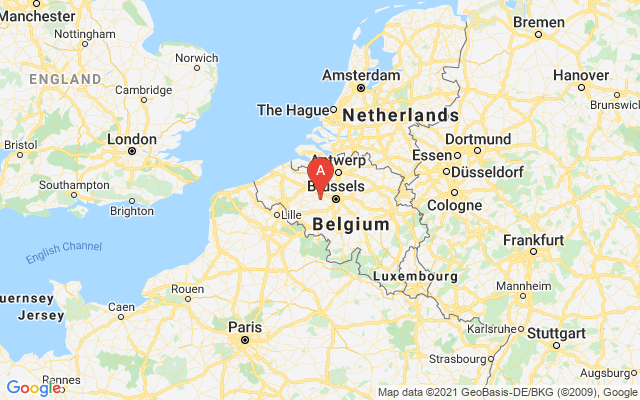
Western Europe, bordering the North Sea, between France and the Netherlands |
| Geographic
Coordinates: |
50 50 N, 4 00 E |
| Area: |
total: 30,528 sq km
land: 30,278 sq km
water: 250 sq km |
| Area
Comparative: |
about the size of Maryland |
| Land
Boundaries: |
total: 1,385 km
border countries: France 620 km, Germany 167 km, Luxembourg 148 km, Netherlands 450 km |
| Coastline: |
66.5 km |
| Maritime
Claims: |
territorial sea: 12 nm
exclusive economic zone: geographic coordinates define outer limit
continental shelf: median line with neighbors |
| Climate: |
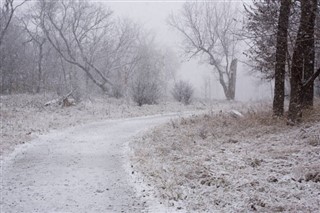
temperate; mild winters, cool summers; rainy, humid, cloudy |
| Terrain: |
flat coastal plains in northwest, central rolling hills, rugged mountains of Ardennes Forest in southeast |
| Elavation
Extremes: |
lowest point: North Sea 0 m
highest point: Signal de Botrange 694 m |
| Natural
Resources: |
coal, natural gas, construction materials, silica sand, carbonates |
| GOVERNEMENT |
| Governement
Type: |
federal parliamentary democracy under a constitutional monarch |
| Administratives
Divisions: |
10 provinces (French: provinces, singular - province; Dutch: provincies, singular - provincie) and 3 regions* (French: regions; Dutch: gewesten); Antwerpen, Brabant Wallon, Brussels* (Bruxelles), Flanders*, Hainaut, Liege, Limburg, Luxembourg, Namur, Oost-Vlaanderen, Vlaams-Brabant, Wallonia*, West-Vlaanderen
note: as a result of the 1993 constitutional revision that furthered devolution into a federal state, there are now three levels of government (federal, regional, and linguistic community) with a complex division of responsibilities |
| Independence |
4 October 1830 (a provisional government declares independence from the Netherlands); 21 July 1831 (King Leopold I ascends to the throne) |
| National
Holiday: |
21 July (1831) ascension to the Throne of King Leopold I |
| Constitution: |
7 February 1831, last revised 14 July 1993; parliament approved a constitutional package creating a federal state |
| Legal
System; |
civil law system influenced by English constitutional theory; judicial review of legislative acts; accepts compulsory ICJ jurisdiction, with reservations |
| Suffrage |
18 years of age; universal and compulsory |
| Executive
Branch: |
chief of state: King ALBERT II (since 9 August 1993); Heir Apparent Prince PHILIPPE, son of the monarch
head of government: Prime Minister Guy VERHOFSTADT (since 13 July 1999)
cabinet: Council of Ministers formally appointed by the monarch
elections: none; the monarchy is hereditary; following legislative elections, the leader of the majority party or the leader of the majority coalition is usually appointed prime minister by the monarch and then approved by Parliament
note: government coalition - VLD, MR, PS, SP.A-Spirit |
| Legislative
Branch: |
bicameral Parliament consists of a Senate or Senaat in Dutch, Senat in French (71 seats; 40 members are directly elected by popular vote, 31 are indirectly elected; members serve four-year terms) and a Chamber of Deputies or Kamer van Volksvertegenwoordigers in Dutch, Chambre des Representants in French (150 seats; members are directly elected by popular vote on the basis of proportional representation to serve four-year terms)
elections: Senate and Chamber of Deputies - last held 18 May 2003 (next to be held no later than May 2007)
election results: Senate - percent of vote by party - SP.A-Spirit 15.5%, VLD 15.4%, CD & V 12.7%, PS 12.8%, MR 12.1%, VB 9.4%, CDH 5.6%; seats by party - SP.A-Spirit 7, VLD 7, CD & V 6, PS 6, MR 5, VB 5, CDH 2, other 2 (note - there are also 31 indirectly elected senators); Chamber of Deputies - percent of vote by party - VLD 15.4%, SP.A-Spirit 14.9%, CD & V 13.3%, PS 13.0%, VB 11.6%, MR 11.4%, CDH 5.5%, Ecolo 3.1%; seats by party - VLD 25, SP.A-Spirit 23, CD & V 21, PS 25, VB 18, MR 24, CDH 8 Ecolo 4, other 2
note: as a result of the 1993 constitutional revision that furthered devolution into a federal state, there are now three levels of government (federal, regional, and linguistic community) with a complex division of responsibilities; this reality leaves six governments each with its own legislative assembly; for other acronyms of the listed parties see the Political parties and leaders entry |
| Judicial
Branch: |
Supreme Court of Justice or Hof van Cassatie (in Dutch) or Cour de Cassation (in French) (judges are appointed for life by the Government; candidacies have to be submitted by the High Justice Council) |
| Political
parties and Leaders: |
Christian Democrats and Flemish or CD & V [Jo VANDEURZEN]; Ecolo (Francophone Greens) [Jean-Michel JAVAUX, Evelyne HUYTEBROECK, Claude BROUIR]; Flemish Liberal Democrats or VLD [Bart SOMERS]; Flemish Socialist Party.Alternative or SP.A [Steve STEVAERT]; Francophone Humanist and Democratic Center of CDH [Joelle MILQUET]; Francophone Reformist Movement or MR [Didier REYNDERS]; Francophone Socialist Party or PS [Elio DI RUPO]; GROEN! (formerly AGALEV, Flemish Greens) [Vera DUA]; National Front or FN [Daniel FERET]; New Flemish Alliance or NVA [Bart DE WEVER]; Spirit [Els VAN WEERT]; note - new party now associated with SP.A; Vlaams Belang or VB [Frank VANHECKE]; other minor parties |
| PEOPLE |
| Population: |
10,348,276 (July 2004 est.) |
| Age structure: |
0-14 years: 17.1% (male 901,486; female 863,092)
15-64 years: 65.6% (male 3,424,438; female 3,364,057)
65 years and over: 17.3% (male 739,479; female 1,055,724) (2004 est.) |
| Median age: |
total: 40.2 years
male: 38.9 years
female: 41.5 years (2004 est.) |
| Nationality: |
noun: Belgian(s)
adjective: Belgian |
| Ethnic groups: |
Fleming 58%, Walloon 31%, mixed or other 11% |
| Religions: |
Roman Catholic 75%, Protestant or other 25% |
| Languages: |
Dutch (official) 60%, French (official) 40%, German (official) less than 1%, legally bilingual (Dutch and French) |
| COMUNICATIONS |
| Telephones - main
lines in use: |
5,120,400 (2002) |
| Telephones - mobile
cellular: |
8,135,500 (2002) |
| Telephone system: |
general assessment: highly developed, technologically advanced, and completely automated domestic and international telephone and telegraph facilities
domestic: nationwide cellular telephone system; extensive cable network; limited microwave radio relay network
international: country code - 32; 5 submarine cables; satellite earth stations - 2 Intelsat (Atlantic Ocean) and 1 Eutelsat |
| Radio broadcast
stations: |
FM 79, AM 7, shortwave 1 (1998) |
| Television broadcast
stations: |
25 (plus 10 repeaters) (1997) |
| Internet country
code: |
.be |
| Internet hosts: |
166,799 (2004) |
| Internet users: |
3.4 million (2002) |
| TRANSPORT |
| Railways: |
total: 3,518 km
standard gauge: 3,518 km 1.435-m gauge (2,631 km electrified) (2003) |
| Highways: |
total: 148,216 km
paved: 116,687 km (including 1,727 km of expressways)
unpaved: 31,529 km (2000) |
| Waterways: |
2,043 km (1,528 km in regular commercial use) (2003) |
| Pipelines: |
gas 1,485 km; oil 158 km; refined products 535 km (2004) |
| Ports and harbors: |
Antwerp (one of the world's busiest ports), Brugge, Gent, Hasselt, Liege, Mons, Namur, Oostende, Zeebrugge |
| Merchant marine: |
total: 50 ships (1,000 GRT or over) 1,146,301 GRT/1,588,184 DWT
by type: bulk 1, cargo 8, chemical tanker 11, container 6, liquefied gas 18, petroleum tanker 6
foreign-owned: Denmark 6, Finland 1, France 2, Netherlands 3
registered in other countries: 69 (2004 est.) |
| Airports: |
42 (2003 est.) |
| Airports - with
paved runways: |
total: 25
over 3,047 m: 6
2,438 to 3,047 m: 8
1,524 to 2,437 m: 3
914 to 1,523 m: 1
under 914 m: 7 (2004 est.) |
| Airports - with
unpaved runways: |
total: 18
914 to 1,523 m: 2
under 914 m: 16 (2004 est.) |
| Heliports: |
1 (2003 est.) |
|